
Risk Management
Risk Management for Complex Project Delivery
Identify risk before it becomes delay or overrun. PACE turns a structured risk questionnaire into a live risk register, links every risk to cost and schedule contingency, and keeps both current as the project changes — with AI surfacing exposure before it grows.
Risk Management That Updates Itself — Not a Register Nobody Opens
Most risk registers are built once, reviewed occasionally, and disconnected from the budget and schedule they’re supposed to protect. By the time a risk becomes a real cost or delay, the register hasn’t caught up. PACE connects risk assessment directly to contingency and schedule float, so the register reflects the current state of the project — not the state it was in during the last review meeting.
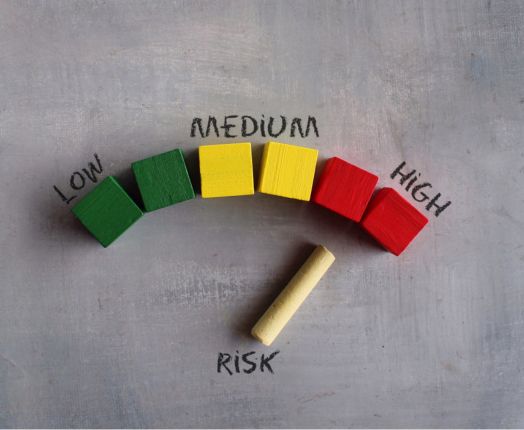
1. Risk Assessment and Scoring
A structured risk questionnaire is the starting point for every opportunity, proposal, and project — not a compliance checkbox.
– Risk questionnaire responses generate a risk score for the opportunity, proposal, or project
– Scoring can trigger actions the Project Manager needs to address
– Questionnaire responses can automatically populate the risk register with relevant risks
– A new round of responses updates the register — adding or removing risks based on current project conditions
2. Risk Register and Classification
Every risk in PACE is structured, not just listed.
– Add risks to the register from the risk library, directly, through the questionnaire, or copied from another project
– Classify each risk by impact and probability
– Assign a weighting to risk cost, used to calculate the contingency amount required

3. Contingency and Schedule Impact Management
Risk isn’t just a cost line — it’s tested against the schedule and the budget in real time.
– Assign a schedule impact to each risk and compare it against available float in the project schedule
– If weighted risk cost exceeds available budget contingency, or cumulative schedule impact exceeds available float, PACE automatically adds the shortfall as an additional risk to the register
– These automatic adjustments update on their own as risks are mitigated, closed out, or budgets change — no manual reconciliation required
Early Warning, Built Into the Register
PACE AI works on live risk, cost, and schedule data to help teams see exposure building — not just document it after the fact.
– Flags risks where contingency or float is running short before it’s exhausted
– Surfaces emerging risk patterns across projects and portfolios
– Supports faster, more consistent risk review cycles time


Risk Tied to Money and Time — Not a Standalone Spreadsheet
A risk register that isn’t connected to budget and schedule is just documentation. PACE makes risk part of execution control.
For Service Providers: Protect contingency and margin by knowing, in real time, whether current risk exposure still fits inside the budget and schedule float you have left.
For Capital / Owner Organizations: Maintain governance and audit-readiness with a risk register that shows not just what could go wrong, but exactly how much budget and schedule cushion remains to absorb it.
Who Uses Risk Management in PACE
- Project Managers
- Project Controls Managers
- Risk Managers
- PMO / Portfolio Leaders
- Executives and Capital Program Leaders

Frequently Asked Questions
How does PACE calculate contingency from project risk?
PACE classifies each risk by impact and probability, applies a weighting to determine its cost, and compares the total weighted risk cost against available budget contingency and schedule float.
What happens if a project doesn't have enough contingency to cover its risks?
Can risks be reused across projects?
Does PACE compare risk against the project schedule, not just the budget?
See Risk Management Working in Real Time
Let's Talk — We're Here to Help
We’re happy to answer your questions and help you determine how Frontrol can bring clarity, control, and confidence to your project execution. Whether you’re exploring automation, need better visibility, or want to streamline contractor coordination, we’ve got you covered.
Why Frontrol?
- Client-Centric
- Independent & Insightful
- Technically Competent
- Results-Driven
- Solution-Oriented
- Transparent & Trusted
What happens next?
We Connect
We Explore Together
We present a proposal