
Execution Control for Heavy Civil Infrastructure Projects
The Challenge
Heavy civil programs operate under a level of complexity most project software was never built for
Multiple funding sources on the same project — federal, state, local, and bond dollars, each with different reporting requirements
Long execution timelines spanning years, not months
Constant scope changes driven by ground conditions that can't be fully known until work begins
Cost and schedule tracking that has to hold up under public audit, not just internal review
Fragmented systems — a scheduling tool for the timeline, a spreadsheet for cost, a separate process for change orders
Most contractors don't struggle because they lack data. They struggle because they lack execution visibility — a single, reliable view of how work, cost, and funding are performing in real time, across every phase of the program. PACE was built specifically for this reality.
Core Capabilities for Heavy Civil

Multi-Source Funding Tracking

Real-Time Change Order Management
Phase-Level Cost & Progress Visibility
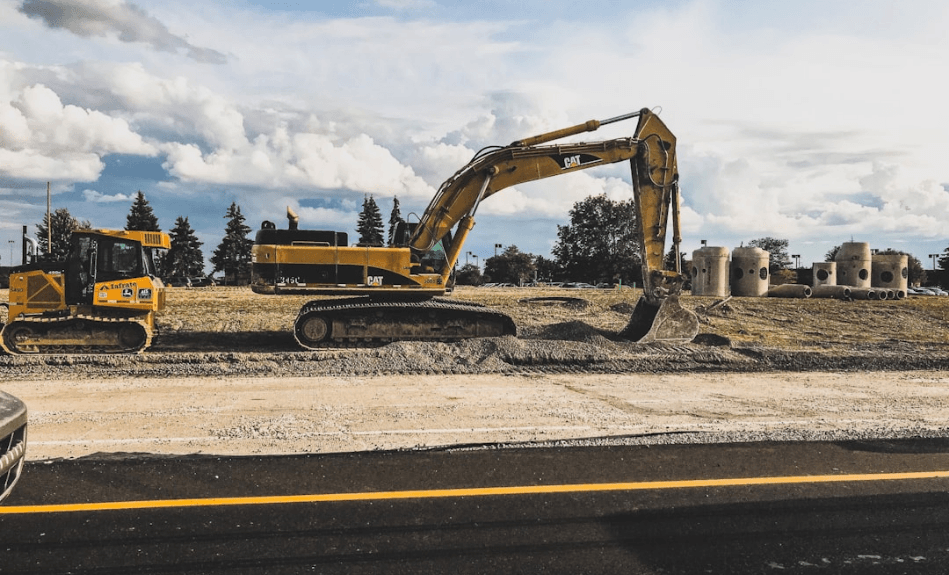
Track earthwork, utilities, paving, and structures individually, with progress measured against Schedule of Values / Bill of Quantities structures, and rolled up automatically into the full program view.

Quantity & Productivity Tracking

Audit-Ready Documentation

Live Forecast-to-Complete
How PACE Supports Heavy Civil Execution
PACE acts as the execution system of record — connecting planning, progress, cost, funding, and change data into one integrated environment. Cost and schedule live in the same system, so performance can be tracked as one connected picture instead of two separate tools reconciled after the fact.
- Real-time visibility into program and project health
- Early detection of cost, schedule, and productivity deviation
- Structured project controls across every phase — earthwork, utilities, paving, structures
- AI-enabled insights for faster, better-informed decisions

AI-Enabled Execution Intelligence (PACE AI)
PACE AI operates directly on live execution data — cost, schedule, quantities, and change — not on exports or static reports. It’s built into the platform, not added on top of it.
- Detect emerging cost, schedule, and productivity deviation before it compounds
- Generate AI Briefs embedded inside project and program reports
- Automate status and financial narrative reporting
- Support supervised actions such as reforecasting or cost review
This is not generic AI. It’s execution intelligence built into the delivery system.
Typical Use Cases
- Track cost and schedule across multiple funding sources on the same infrastructure program
- Detect margin erosion from ground-condition change orders before it compounds
- Identify productivity decline on earthwork or paving before it impacts schedule
- Produce audit-ready documentation without a dedicated audit-prep effort
- Give program executives a live view of which projects need attention, and why
- Replace manual reconciliation between scheduling tools, cost spreadsheets, and change logs with one connected system

Who Uses PACE on Heavy Civil Programs
- Project Managers and Project Controls Managers
- Construction Managers and Field Superintendents
- Commercial and Finance teams
- Program and Portfolio leaders
- Executives responsible for public accountability and reporting
All working from the same execution data foundation.
Outcomes for Heavy Civil Teams
- Earlier detection of cost, schedule, and margin deviation
- Stronger audit and compliance posture, built into daily execution rather than assembled afterward
- Fewer surprises at month-end reporting
- Reduced manual reconciliation across funding sources
- Protected margin on programs where ground conditions and scope change are a constant
Frequently Asked Questions
What is project controls software for heavy civil construction?
How does PACE handle multiple funding sources on the same infrastructure project?
What's the difference between an EPC firm and a general contractor (GC) in heavy civil delivery?
An EPC (Engineering, Procurement, Construction) firm typically holds the prime contract with the project owner and manages design, procurement, and overall program control — often subcontracting field construction work to general contractors. A GC manages day-to-day field execution, crews, and subcontractors, and is usually more focused on construction administration, billing, and schedule of values. PACE supports both roles, connecting program-level cost and schedule control with field-level execution data.
Can project controls software manage change orders caused by unforeseen ground conditions?
What does audit readiness look like for publicly funded infrastructure projects?
Audit readiness means every approval, change, and financial transaction is documented automatically as work happens, rather than assembled after the fact when an audit request comes in. PACE builds this documentation into daily execution, so responding to a funding agency’s audit request is a matter of seconds, not a multi-day scramble across spreadsheets and email threads.
How does PACE track productivity on heavy civil work?
PACE captures completed quantities — such as cubic yards of earthwork, tons of material placed, or linear feet installed — alongside the hours spent producing them, at the work-item level. This gives project teams a planned-vs-actual productivity view that rolls up into cost and schedule performance, instead of relying on percentage-complete estimates alone.