A note from Neeraj Garg, CEO & Co-Founder, Frontrol
I get asked a lot why we started Frontrol. The short answer is simple: we got tired of watching project teams lose entire weeks to spreadsheets.
Before Frontrol, I spent years in project delivery — watching reports get built by hand, watching project managers spend more time formatting status updates than actually managing their projects. It wasn’t a lack of effort. It was a lack of infrastructure. The tools were doing exactly what they were built to do. They just weren’t built to do enough.
The Conversation That Started It
In 2019, Arindam, Suresh, and I started talking about this seriously. The three of us had different backgrounds — different companies, different roles, different corners of the industry — but we kept landing on the same frustration. We’d all sat through the same status meetings. We’d all waited on the same reports. We’d all watched problems get flagged weeks after they had already started, long after the point where anyone could actually do something about them.
That’s the part that stuck with us. Not that problems happened — problems always happen on complex projects. What stuck with us was how late we found out. By the time a deviation showed up in a report, it had usually been quietly compounding for weeks.
Systems That Documented History, Not Systems That Helped You Act
Every system we’d used up to that point was good at one thing: documenting what had already happened. Cost tracking lived in one place. Scheduling lived in another. Risk registers, change orders, forecasts — each had its own tool, its own owner, its own update cycle.
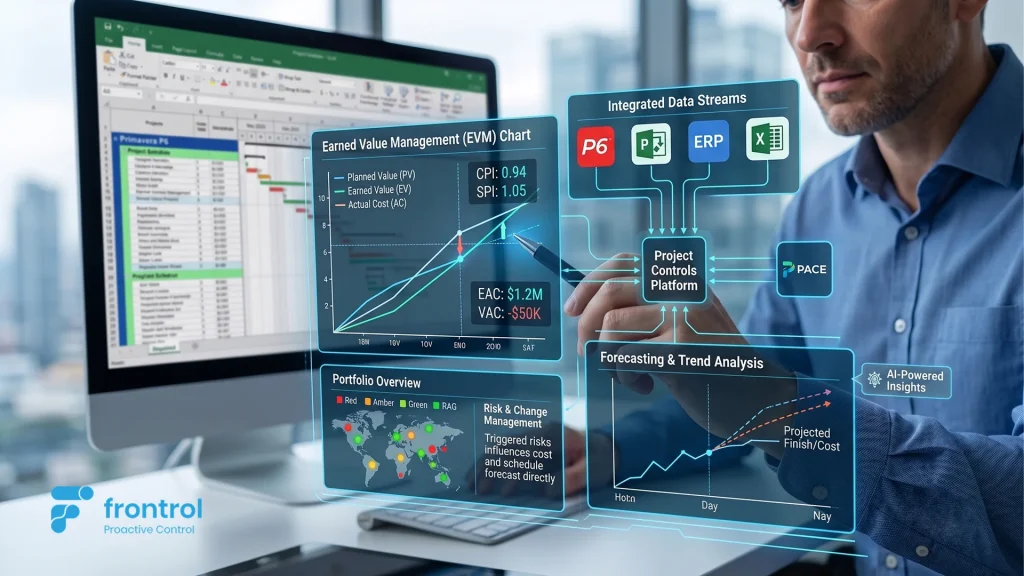
Individually, every one of those systems worked fine. The problem was what happened between them. Someone had to manually pull cost data from one system, schedule data from another, reconcile the two, cross-reference it against the risk log, and stitch it all together into something a project manager or executive could actually read. And by the time that report was finished, it was already behind the project. It described where things had been, not where things were.
We didn’t set out to build a better version of that process. We set out to ask whether that process needed to exist at all.
What We Actually Wanted to Build
We didn’t want to build another PMIS. The market already had plenty of tools that could schedule a project, track a budget, or log a risk. What was missing wasn’t another point solution — it was the connective layer between all of them.
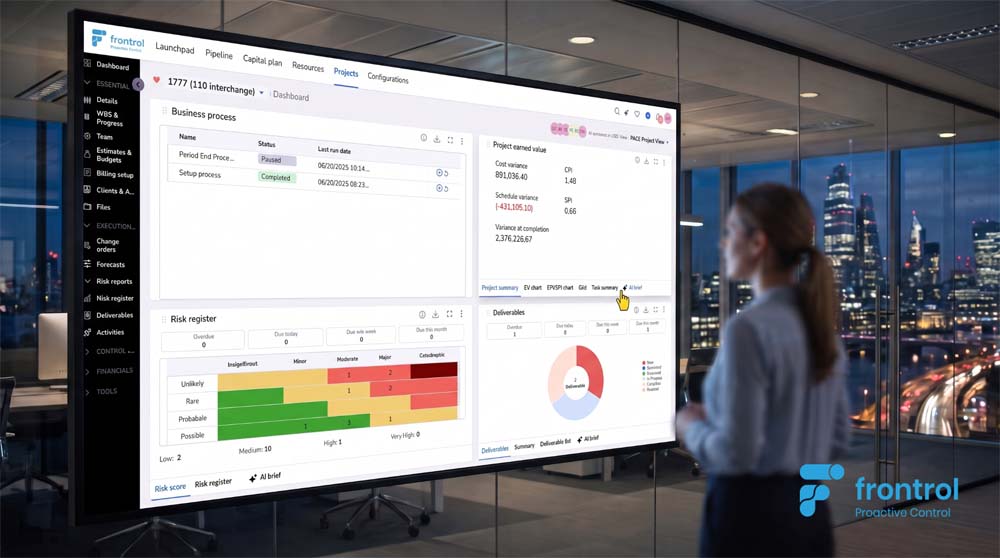
We wanted to build something that brought cost, schedule, risk, and change into a single, live view. Not a report generated after the fact, but a system that could surface what needed attention while there was still time to act on it. The difference between those two things — reporting a problem and catching it early — is the entire reason PACE exists.
The Question That Still Guides Everything We Build
That early conversation in 2019 became PACE. But the question we asked ourselves at the start hasn’t changed, and it’s still the filter we run every feature, every decision, and every roadmap conversation through today:
Does this help someone see a problem earlier, or is it just a better way to report it late?
If the answer is the second one, we don’t build it. That question is a stricter bar than it sounds, and it’s turned down a lot of ideas that would have been easy to ship. But it’s also what’s kept PACE focused on the thing that actually matters to the people using it — not more dashboards, not more reports, but earlier visibility into the moment a project starts to drift, while there’s still room to fix it.
That’s still what we’re building toward, every day.